
Inspired by donor-funded research at VGH, Track and Trace aims to anticipate risk earlier and help save lives in BC
A first-in-Canada technology to analyze and track the flow of toxic drugs and create earlier warning systems is coming to BC – and it’s thanks in part to donors like you.
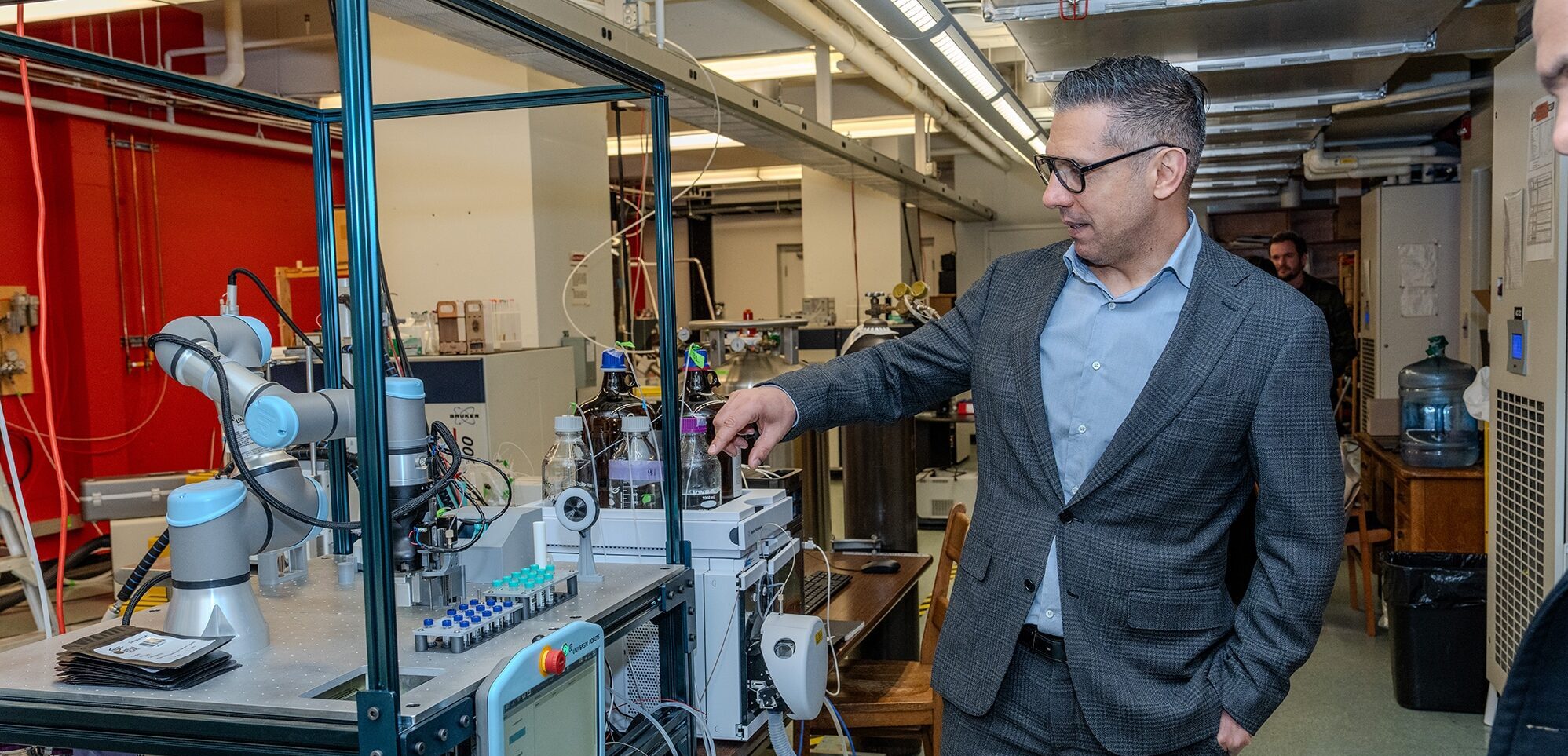
A two-year pilot program launched by the BC Ministry of Public Safety, Aidos Innovations’ “Track and Trace” automates drug analysis using lab robotics and provides an artificial intelligence-assisted dashboard for law enforcement to map and track dangerous drugs in BC communities.
This groundbreaking technology will provide clearer insights into the illicit drug supply, allowing for earlier warnings of emerging drug threats and better-informed public safety and health responses.
“The emergence of ever-more toxic contamination of the unregulated drug supply is resulting in complex clinical presentations, some of which we do not have standardized treatment protocols for,” said Dr. Pouya Azar, Co-Medical Manager of Complex Pain and Addiction Services at Vancouver General Hospital (VGH). “By improving visibility into what is circulating, Track and Trace helps front-line teams anticipate risk earlier and adapt care before overdose patterns escalate.”
The province is providing $300,000 annually for two years to support the pilot program.
“Track and Trace has the potential to save and improve lives across BC,” said Angela Chapman, President & CEO of VGH & UBC Hospital Foundation. “This work began with the generosity of donors to VGH & UBC Hospital Foundation, who supported the research that inspired this groundbreaking technology through the Innovations in Mental Health, Addictions and Pain Program (IMAPP) led by Dr. Azar. It is exciting to see the research of our health care partners translated into real-world solutions, providing hope in a crisis that continues to devastate our communities.”
Track and Trace
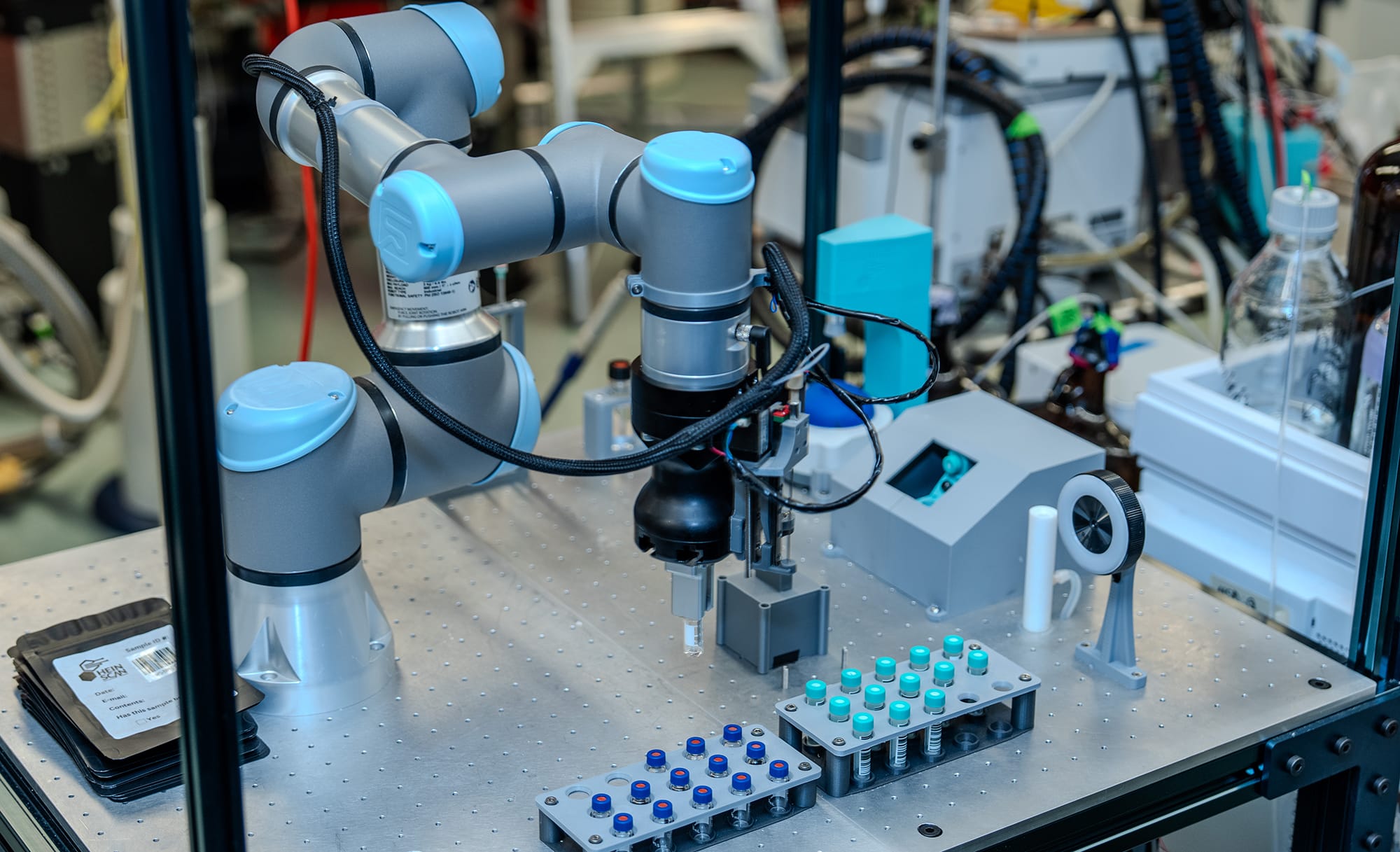
Track and Trace is a program from Aidos Innovations, a non-profit science institute, developed in collaboration with the University of British Columbia (UBC). Led by a multidisciplinary team specializing in chemistry, clinical medicine and translational science, Track and Trace aims to save lives by helping front-line responders to more quickly identify and respond to the most dangerous substances in the illegal drug supply. It is not about tracking individuals or criminalizing people who use drugs.
Track and Trace will help determine where the greatest harms originate and enable an earlier public heath response by:
- providing forensic drug analysis using lab robotics to detect new toxic substances in the illicit drug supply
- using predictive geographic mapping to establish illicit drug supply distribution patterns and movement over time
- providing early warnings of changes to the toxic-drug supply to support public health and safety
- providing law enforcement with advanced forensic intelligence tools to trace drug supply chains, detect diversion events and disrupt production methods fuelling organized crime
“BC continues to face a toxic-drug crisis that puts lives at risk due to increasingly dangerous substances in the unregulated drug supply,” said Josie Osborne, Minister of Health. “Through this innovative Track and Trace technology, drugs can be quickly analyzed to identify harmful compounds and map how they move through communities. This approach supports informed health responses, helping to reduce harm and save lives.”
Innovations in Mental Health, Addictions, and Pain Program (IMAPP)
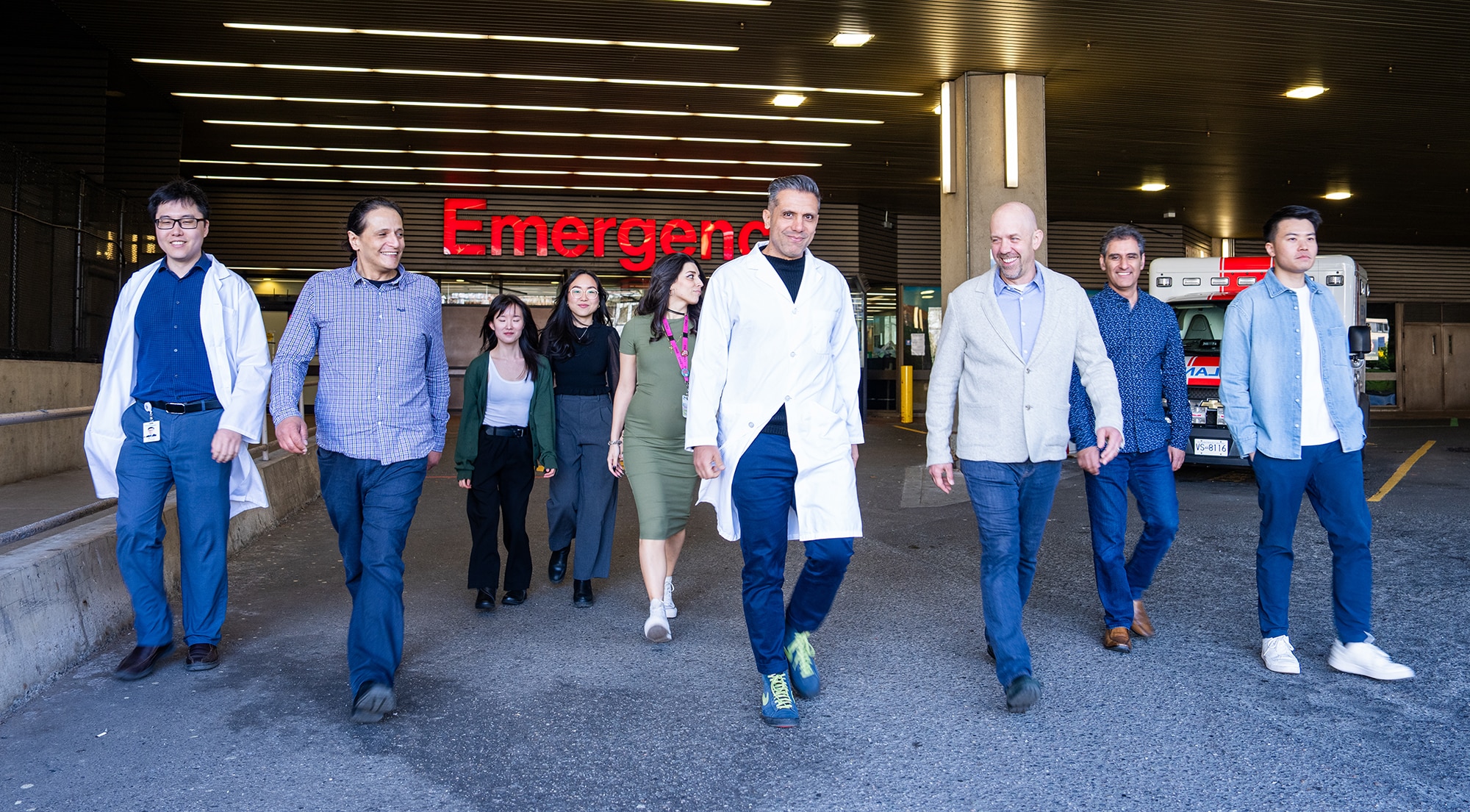
Vancouver has remained the provincial epicentre of the opioid overdose crisis since it was declared a public health emergency 10 years ago. Since then, more than 18,000 people in BC have died from toxic drugs, including more than 5,000 in the Vancouver Coastal Health region.
The rate of death has fallen since peaking in 2023; however, the crisis persists with nearly five people in BC losing their lives daily, according to the BC Coroners Service.
This calls for revolutionary advancements in care.
Enter IMAPP, a first-of-its kind program in Canada tackling the opioid epidemic and revolutionizing treatment standards across North America – benefiting patients in BC first. Led by Dr. Azar with donor support through VGH & UBC Hospital Foundation, IMAPP:
- Unites world-class clinicians and scientists with community leaders and patients
- Bridges the gaps between basic science, clinical research and patient care
- Tackles the complex interplay of mental health, addiction, and pain with tailored, evidence-based solutions
- Develops cutting-edge tools and therapies, such as opioid detectors and novel therapies
Pioneered at VGH, Dr. Azar’s innovative protocols for rapidly initiating patients on life-saving Opioid Agonist Treatment (rOAT) in a fraction of the time previously required are now saving lives daily and embedded in care at hundreds of hospitals across North America.
Now with a significantly expanded team, meaningful discovery is accelerating at a rapid pace and new hope is emerging – but there is still work to be done.
VGH & UBC Hospital Foundation partners with donors to fuel groundbreaking research, world-class health care teams, and life-saving treatments benefitting everyone in BC. To donate, visit vghfoundation.ca/ways-to-give.
Share this: