
With donor support, Canada’s first on-reserve cardiac rehab program is improving access to culturally safe care in BC
When Dr. Miles Marchand was doing his Fellowship in Cardiac Rehabilitation at Vancouver General Hospital, he was surprised by how few Indigenous patients were enrolled.
“What became clear to me was that there is tremendous opportunity to strengthen the continuum of care,” says Dr. Marchand, a member of the Okanagan Indian Band (Syilx Okanagan Nation), Canada’s first First Nations cardiologist and research scientist at the donor-funded Dilawri Cardiovascular Institute. “We see Indigenous patients during acute hospital admissions, but cardiac rehabilitation is where long-term prevention, recovery and empowerment really happen. Ensuring that Indigenous patients have meaningful, culturally safe access to those programs is an important step toward supporting heart health in communities.”
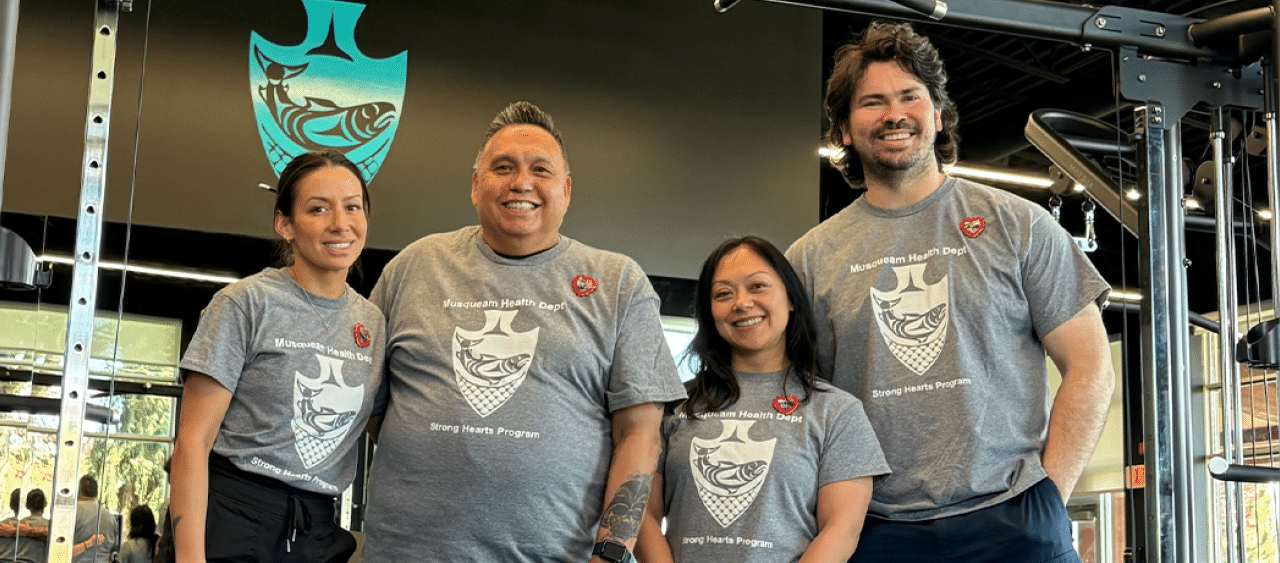
Dr. Marchand began considering how to improve access to cardiac rehab, and cardiac care in general, for Indigenous communities. In fall 2025, the Strong Hearts program – a collaborative partnership between Vancouver General Hospital Cardiac Rehabilitation and Musqueam First Nation – was launched in the Musqueam community. It is the first on-reserve cardiac rehab program in Canada.
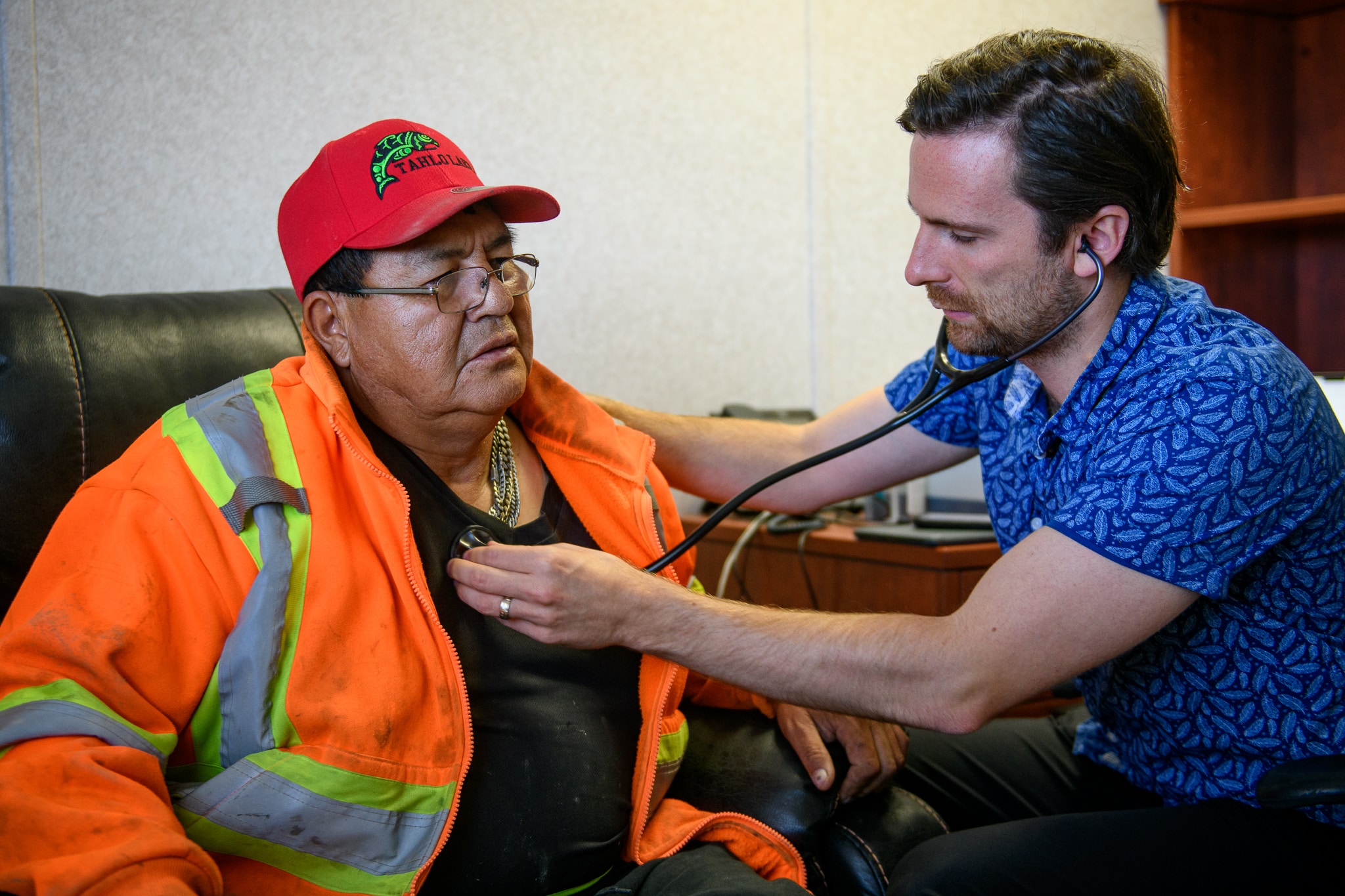
Dr. Marchand visits the community every two months to offer in-person consultations and intakes for patients with or at risk of heart disease, working directly with members of the Musqueam Primary Care team, including a nurse, physiotherapist, chronic disease coordinator and dietitian, who provide additional services for a wholistic, culturally responsive approach to cardiac care.
“People feel safer when they receive care within their community, in a setting they’re confident in,” Dr. Marchand says. “Having a First Nations cardiologist seeing a First Nations person within their community to talk about their cardiac health in a culturally safe way has been quite a profound step forward.”
‘One-stop shop’ for cardiac care
As part of program intake, patients connect with Dr. Marchand and undergo comprehensive cardiovascular evaluation using equipment funded by VGH & UBC Hospital Foundation. The program has brought stress testing, ECGs, Holter monitors and point-of-care blood tests directly into the community so that patients can receive their cardiovascular care in a “one-stop shop.”
Once enrolled in the Strong Hearts Program, participants attend regular education sessions on heart-related topics in a culturally appropriate way, such as the impacts of Land-based exercise on the heart, and take part in supervised exercise sessions at the community gym before sharing a meal of healthy, traditional foods.
“Everything has a Musqueam lens to it, which allows us to connect with the community in a good way,” Dr. Marchand says. “Decentralizing care outside of a hospital setting and bringing health care to the community shows that we’re here to listen and respond and offer care in an equitable way.”
In the first six months of the program, feedback has been positive: participants are feeling stronger, healthier and happier, and the team facilitating the program has been uplifted by patients’ progress. The program’s unique model of an Indigenous-led cardiac rehabilitation program being carried out on-reserve is getting noticed by other Nations, and Dr. Marchand is exploring the development of similar partnerships with other Nations to continue to improving access to culturally safe care within VCH and across British Columbia.
This story was originally published by Vancouver Coastal Health.
Dr. Miles Marchand
Dr. Miles Marchand, a member of the Okanagan Indian Band (Syilx Okanagan Nation), is Canada’s first and only First Nations cardiologist. As the Director of the Centre for Indigenous Cardiovascular Health at the donor-funded Dilawri Cardiovascular Institute, he is bringing culturally safe cardiac care to First Nations communities across BC.
VGH & UBC Hospital Foundation partners with donors to fuel groundbreaking research, world-class health care teams, and life-saving treatments benefitting everyone in BC. To donate, visit vghfoundation.ca/ways-to-give.
Share this: