
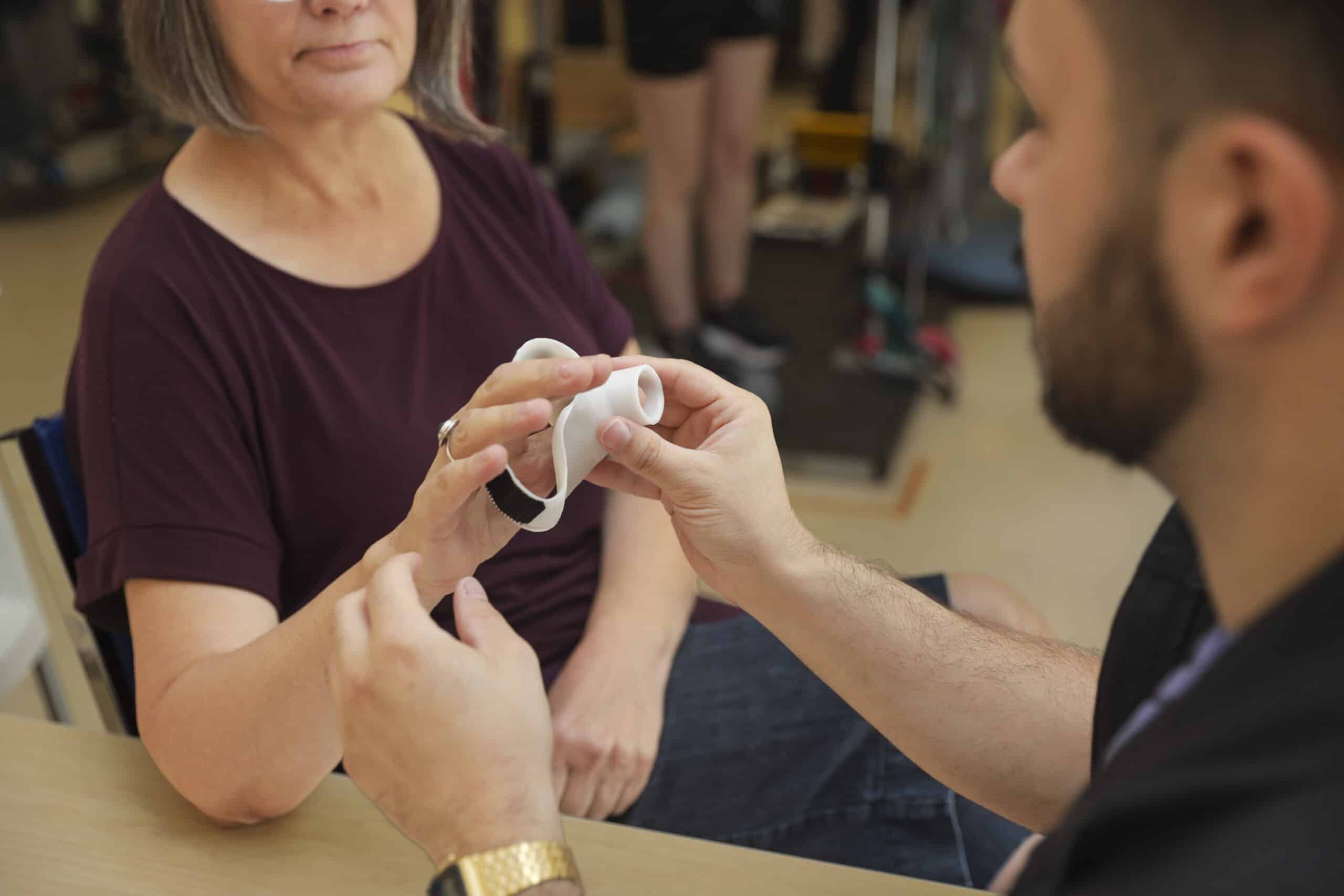
People in Vancouver and surrounding communities have better access to rehabilitation care as Vancouver General Hospital (VGH) launches an on-demand 3D-printing process to produce custom medical splints more efficiently.
“This innovative process is the first-of-its-kind in North America, and it’s already saving time for health care providers and their patients,” said Ravi Kahlon, Minister of Health. “We’re committed to making it easier for people to get the right care at the right time, close to home. That’s why we’re continuing to work with occupational therapists, our partners in PolyUnity and the Vancouver Health Authority to expand this process throughout the region.”
The new printing process combines insight from occupational therapists (OT) with advanced technology to create personalized splints for patients. Developed by a team of OTs at VGH in partnership with Canadian medical 3D-printing company PolyUnity, the new process for rehabilitation care will be phased in throughout the region.
The 3D-printed splint process is supported by VGH & UBC Hospital Foundation.
“The bold leaders at VGH continue to set the pace for health care innovation,” said Angela Chapman, President & CEO of VGH & UBC Hospital Foundation. “As the first hospital in North America to introduce this 3D-printing solution, VGH is improving access to care today while creating a model that can be extended across BC and beyond. We are grateful to our VGH+ community for investing in better care and making breakthroughs like this possible.”
Innovative solution cuts wait times for patients
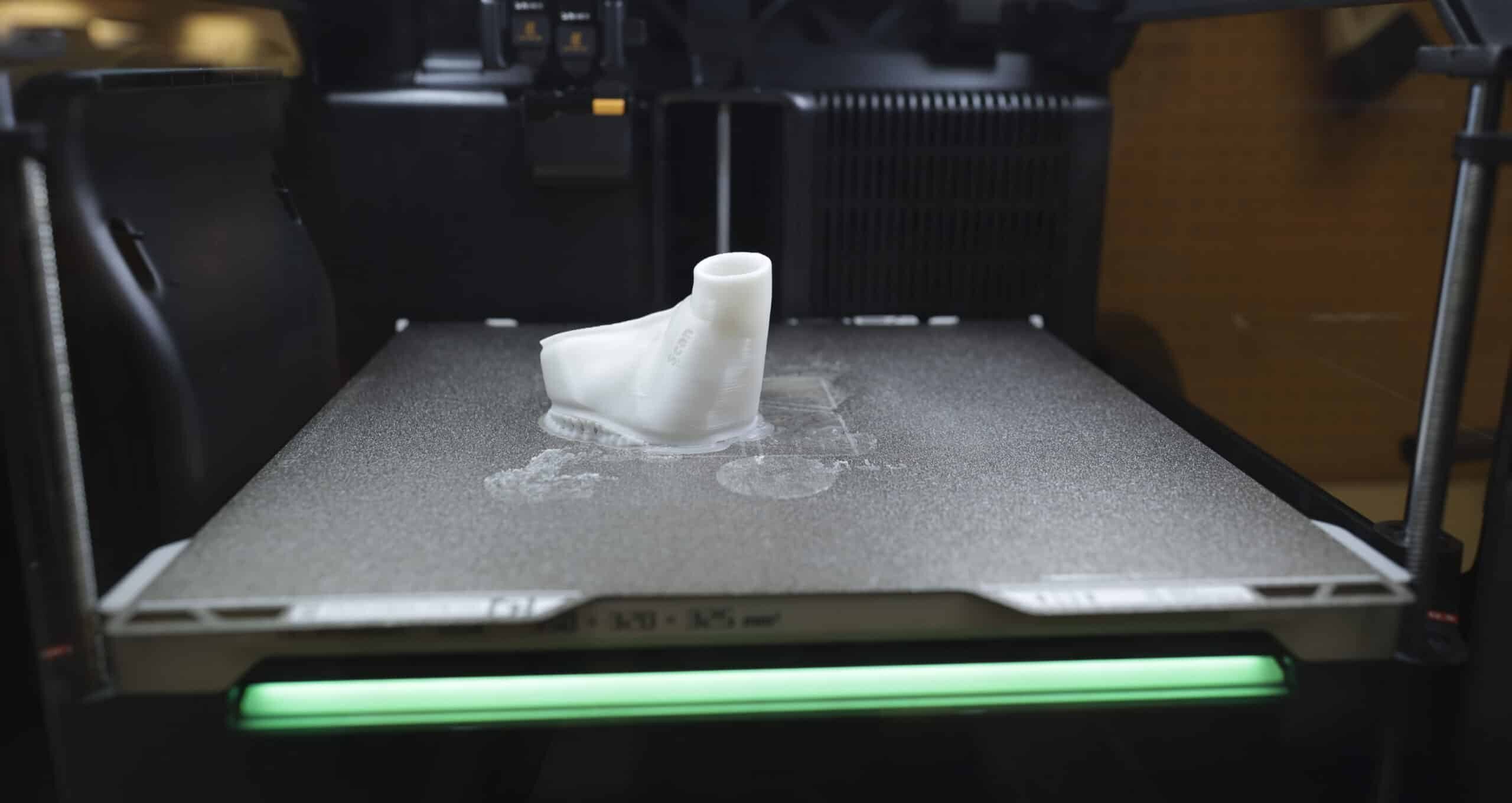
In acute-care settings, splints are required for patients with hand injuries or burns and are critical for rehabilitation. For the past 50 years, clinicians have relied on techniques that can take years to master and hours to replicate.
The new 3D printing allows for quicker patient care, as traditional custom splints can take as much as two hours to make, while the 3D-printed splint can take approximately 30 minutes of clinician time.
“For occupational therapists, every innovation is ultimately about supporting patient recovery, helping them maintain their independence and return to the activities that matter most to them,” said Miriam Wickett, occupational therapy practice leader, Vancouver Coastal Health. “This new approach allows us to deliver customized, evidence-based splints more efficiently and consistently while freeing up valuable clinical time that can be redirected to patient care.”
The new process allows OTs to assess and capture patient measurements, securely share the data with the printing company to create a digital design and print the custom splint on site at VGH. The production process uses a specialized material for printing, which allows OTs to make modifications if a patient needs change.
“An unwavering dedication to patient care and a desire to be the best drives innovation in health care,” said Lorriane Blackburn, vice-president of professional practice and quality and chief clinical information officer, Vancouver Coastal Health. “This 3D-printing solution demonstrates how technology can support better health care experience and outcomes while enhancing the clinician experience and advancing environmental sustainability.”
Planning is underway to expand the service model to rural and remote communities throughout the region, enabling OTs to provide specialized splinting services close to home, reducing the need for patients to travel for care. The health authority is also exploring how the technology can be expanded to other professions, such as physiotherapy.
VGH & UBC Hospital Foundation partners with donors to fuel groundbreaking research, world-class health care teams, and life-saving treatments benefitting everyone in BC. To donate, visit vghfoundation.ca/ways-to-give.
Share this: